
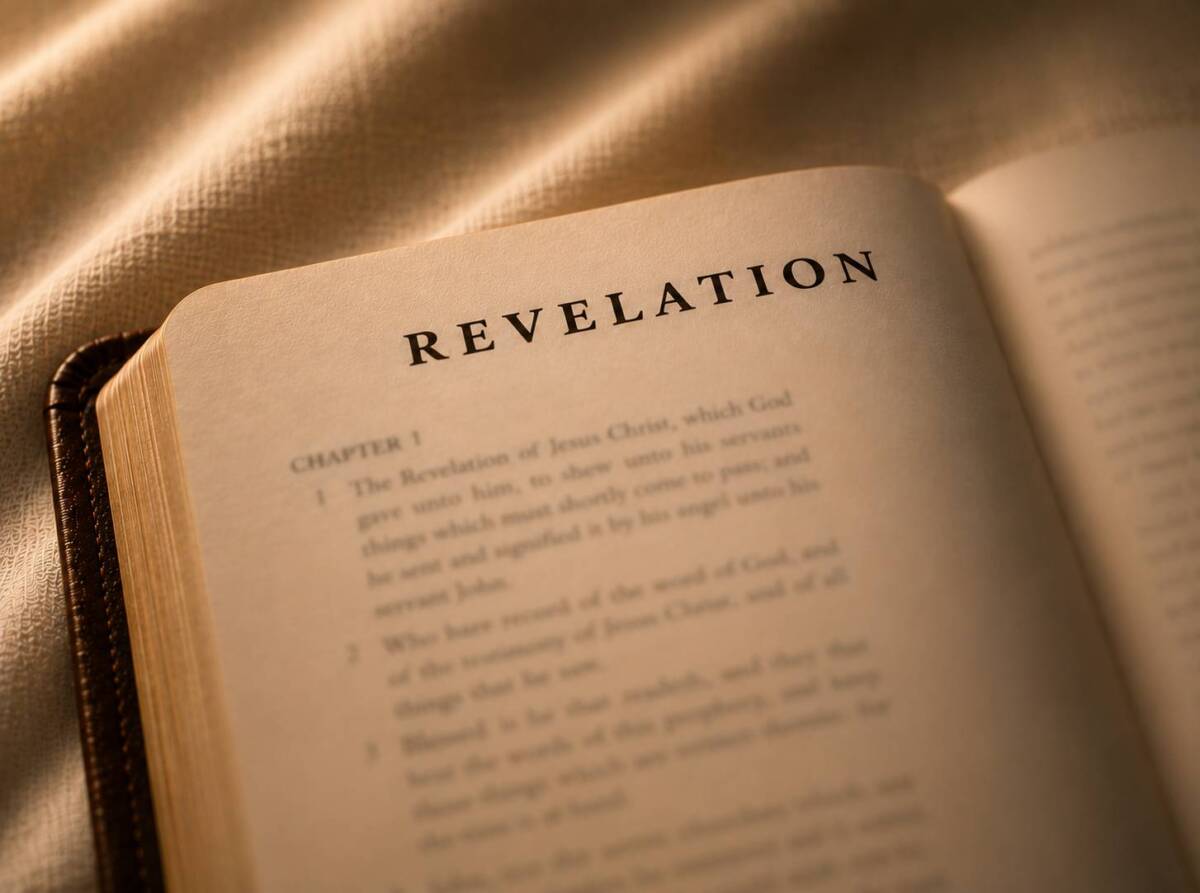
If you have ever felt the Holy Spirit speak to your heart — in prayer, in scripture study, in a moment of quiet meditation — then you already know something important about revelation. It is personal. It is real. And it is available to every child of God, not just those in leadership positions.
We believe one of the most liberating truths in scripture: that the gift of revelation belongs to every believer. Who receives revelation? Anyone and everyone God chooses.
The answer may surprise anyone coming from a different faith or religious background. For some churches, revelation has ceased while in others revelation flows from the top down — from leadership down the hierarchy, with each person receiving revelation only for their “stewardship.” In that system, the prophet or leadership speaks for the whole church, and individual members are expected to receive confirmation of what leadership has decided.
Scripture describes something radically different. The Bible and the Book of Mormon teach that the Holy Spirit is poured out on all believers — men and women, young and old, leaders and laypeople or membership alike. Revelation is not the exclusive property of a few. It is the birthright of every person whose heart is drawn to Christ and welcomes the Holy Spirit, walking in faith.
Joel’s Prophecy: The Spirit Poured Out on All Flesh
The most sweeping promise of the Spirit in all of scripture comes from the prophet Joel:
“And it shall come to pass afterward, that I will pour out my spirit upon all flesh; and your sons and your daughters shall prophesy, your old men shall dream dreams, your young men shall see visions: And also upon the servants and upon the handmaids in those days will I pour out my spirit.” (Joel 2:28–29)
Sons and daughters. Old and young. Servants and handmaids. No restrictions or social barriers. Every distinction of age, gender, and status is set aside. God does not say He will pour out His Spirit on the selected few. He does not say He will pour it out on the leaders. He says He will pour it out on all flesh.
Peter confirmed on the day of Pentecost that this prophecy was being fulfilled: “…This is that which was spoken by the prophet Joel…” (Acts 2:16). And the events of Pentecost demonstrated it — not just the apostles received the Spirit, but everyone gathered in that upper room, men and women alike (Acts 1:13-14). The Spirit fell on the entire community (Acts 2:1-4).
This is a defining promise of the latter days. Not a hierarchy of revelation. Not a chain of command for the Spirit. The Spirit of God poured out on all flesh and definitively upon anyone who believes, repents, is baptized, and receives the laying on of hands.
Moses’ Wish: That All God’s People Were Prophets
One of the most remarkable moments in the Old Testament occurs when two men in Israel’s camp — Eldad and Medad — began prophesying even though they had not gone to the tabernacle with the other elders. Joshua, Moses’ assistant, was alarmed and urged Moses to stop them.
Moses’ response is stunning: “…Enviest thou for my sake? Would God that all the Lord’s people were prophets, and that the Lord would put his spirit upon them!” (Numbers 11:29).
Moses — one of the great deliverers and revelators from the Old Testament or Hebrew Bible — did not want the gift of prophecy reserved for himself. He understood the Lord wished every member of His people could prophesy. Said another way, he wished the Spirit would fall on all of them. He was not threatened by other people hearing from God. He was delighted by it.
This is the opposite of a system that funnels revelation through one man in a leadership position. Moses understood that the ideal is not one prophet and millions of followers. The ideal is a nation of prophets — a people so filled with the Spirit that God speaks to and through all of them.
The Restoration of the Gospel fulfilled Moses’ wish. Through the gift of the Holy Ghost, every baptized believer has direct access to the Spirit of God — for personal guidance, for congregational edification, for the exercise of spiritual gifts and miracles through faith. (see Moroni 7:32-33).
Paul’s Teaching: Gifts Distributed to Every Member
Paul’s teaching on spiritual gifts in 1 Corinthians 12–14 is among the most important passages in the New Testament for understanding how the body of Christ is supposed to function. His message is unmistakable: the gifts are distributed to every member, not concentrated in a few.
“Now there are diversities of gifts, but the same Spirit… But the manifestation of the Spirit is given to every man to profit withal. For to one is given by the Spirit the word of wisdom; to another the word of knowledge by the same Spirit; to another faith by the same Spirit; to another the gifts of healing by the same Spirit; to another the working of miracles; to another prophecy; to another discerning of spirits; to another divers kinds of tongues; to another the interpretation of tongues.” (1 Corinthians 12:4, 7–10)
Notice the distribution: to one… to another… to another. The gifts are spread across the body. No single person has them all. No single person is the exclusive channel. Wisdom goes to one member. Knowledge to another. Prophecy to another. Tongues to another. Healing to another. The body functions because every member contributes what the Spirit gives them.
Paul drives this home with his famous analogy of the body: “And the eye cannot say unto the hand, I have no need of thee: nor again the head to the feet, I have no need of you.” (1 Corinthians 12:21). In a healthy body, every part matters. In a healthy church, every member’s spiritual gifts matter. The moment one person or one office claims to be the exclusive source of revelation, or any spiritual gift, the body is broken — because God designed it to function through the contributions of all its members.
Paul then commands the Corinthians: “Follow after charity, and desire spiritual gifts, but rather that ye may prophesy.” (1 Corinthians 14:1). He says desire the gifts. Seek them. Pursue them. Especially prophecy — speaking forth God’s word for the edification, exhortation, and comfort of others (see 1 Corinthians 14:3). This is not a command for clergy. It is a command for the entire congregation.
The Book of Mormon: Every Good Gift, to Every Person
The Book of Mormon confirms and amplifies what Joel, Moses, and Paul taught.
Moroni lists the gifts of the Spirit — wisdom, knowledge, faith, healing, miracles, prophecy, beholding of angels, tongues, interpretation — and then states: “And all these gifts come by the Spirit of Christ; and they come unto every man severally, according as he will.” (Moroni 10:17). Every good gift comes from Christ. They are distributed to every person according to Christ’s will — not according to priesthood position or rank, not according to institutional position, not according to any human hierarchy.
Moroni then pleads: “And I would exhort you, my beloved brethren, that ye remember that every good gift cometh of Christ.” (Moroni 10:18). And in the preceding verses, he gives this encouragement: “And again, I exhort you, my brethren, that ye deny not the gifts of God, for they are many; and they come from the same God…” (Moroni 10:8). Do not deny them. Do not suppress them. Do not wait for permission to exercise them. They come from God, they are given to every person, and they should be received with gratitude and exercised with faith in good order.
Mormon himself asked the searching questions: “…has the day of miracles ceased? Or have angels ceased to appear unto the children of men? Or has he withheld the power of the Holy Ghost from them? Or will he, so long as time shall last, or the earth shall stand, or there shall be one man upon the face thereof to be saved?” (Moroni 7:35-36). And then he gives the key: “Behold I say unto you, Nay; for it is by faith that miracles are wrought; and it is by faith that angels appear and minister unto men; wherefore, if these things have ceased wo be unto the children of men, for it is because of unbelief, and all is vain” (Moroni 7:37) Faith is the key — not office, not position, not institutional authority. Faith.
What This Looks Like in Practice
In congregations of The Church of Jesus Christ, the gifts of the Spirit are not occasional surprises or special events. They integrate within the normal, expected texture of worship.
On any given Sunday, someone may stand and speak a word of prophecy — a message of edification, exhortation, or comfort spoken directly through the Holy Spirit. Someone may speak in tongues, and another may interpret. A member may share a dream or vision received during the week that bears witness to something the congregation needs to hear. The elders may anoint and pray for the sick, and healings occur. The Spirit may move through the entire body in a way that leaves no doubt God is present and active.
Paul gave clear instructions: “Let the prophets speak two or three, and let the other judge” (1 Corinthians 14:29). Gifts are exercised in order. What is spoken is tested by the congregation. Scripture is the standard against which everything is measured. But within that order, the Spirit moves freely through the entire body — not just through the pastor or the ministry, but through every willing, faithful member.
And this includes women. Joel’s prophecy makes no distinction: “your sons and your daughters shall prophesy.” The Spirit falls on daughters as surely as on sons. Women receive dreams, visions, prophecy, and spiritual gifts just as men do. The gift of the Holy Ghost does not recognize gender barriers any more than it recognizes barriers of age or social status. If God pours His Spirit on all flesh, then every member — man or woman, old or young — has standing before God to receive and exercise the gifts He gives.
The only requirement is faith. Not rank. Not ordination. Not permission from leadership. Faith — the substance of things hoped for, the evidence of things not seen (see Hebrews 11:1). You must believe that God speaks and that He speaks to you. And then you must be willing to step forward in faith when He does.
Any revelation brought before the congregation is tested as a safeguard to protect the body. “Despise not prophesyings. Prove all things; hold fast that which is good” (1 Thessalonians 5:20–21). Do not suppress the gifts. Do test them. Both instructions come in the same breath because both are essential.
Accepting Revelation for the Entire Body of Christ
The Church of Jesus Christ believes that revelation comes through the Holy Spirit upon all those across mankind. Pharoah received a dream from Almighty God which required correct interpretation from Joseph of Egypt (see Genesis 41), and Nebuchadnezzar received a dream which Daniel interpreted without ever being told the dream’s contents (see Daniel 2). Those dreams were from unbelievers, yet were prophetic and required the Spirit of prophecy for correct interpretation. The Lord God Almighty speaks to anyone He chooses and interpretations also come from the Lord through His servants.
To consider an experience a revelation in The Church of Jesus Christ today, we follow the pattern established already by our church in the New Testament. The disciples formally gathered frequently in the book of Acts for various reasons. These included setting up church structure (see Acts 1 and 6), ordinations of Apostles (see Acts 1 and 13), taking official church positions on critical items of debate like circumcision (see Acts 15), and—yes—reviewing a submitted experience as a potential revelation to the church (see Acts 10-11). This gathering of the disciples was overseen by Peter, in which he submitted a dream and the disciples reviewed and approved the experience. This forever changed the missionary outlook of the church in that day—the gospel could go to the Gentiles!
The structure for reviewing revelations today is exactly the same as the days of Acts. The Lord gives an experience. That experience is submitted to the ministry. The ministry—if they believe the experience is from the Lord and for the entire body of Christ—submits the experience to the Apostles. The ministry of the church then gathers at a conference where today’s disciples carefully pray over and review the experience. If voted and approved, the blessed revelation is shared to the entire church body. It is not considered canon or scripture, but is an officially approved revelation of the church.
For anyone coming from a different faith tradition, this understanding of revelation may feel unfamiliar — even unsettling. In other systems, revelation flows from the top down. The leadership or prophet receives revelation for the whole church. Members receive revelation for their own lives and stewardships, but not for the church as a body. And if a member receives something that contradicts what leadership has said, the member is expected to yield.
This model has a certain appeal — it feels orderly, structured, and safe. But it has two fatal flaws:
- First, it contradicts scripture. Neither the Bible nor the Book of Mormon describes a system in which one person receives all revelation for the body. Paul describes a body in which every member contributes gifts. Joel describes the Spirit poured on all flesh. Moses wished all God’s people were prophets. Moroni says gifts come to every person. The biblical pattern is unmistakable: revelation is distributed, not centralized.
- Second, it removes the very safeguard that protects the church from error. If one person is the sole source of binding revelation, and the body has no standing to test or challenge what that person declares, then there is no check on false teaching.
The Bible and Book of Mormon point to a different model. The Spirit speaks through the body. The body tests what is spoken. Scripture is the standard. No single person controls doctrine. This is the model Paul describes. It is the model which the church as recorded in Acts enacted. It is the same model the Book of Mormon affirms, and the model The Church of Jesus Christ practices today.
It requires more from every member — you cannot simply follow a single person and assume the work of discernment is done for you. You must know scripture. You must cultivate sensitivity to the Spirit. You must be willing to test, to discern, and to hold fast to what is good. But this is not a burden. It is freedom — the freedom of a people who hear God’s voice for themselves and walk with Him directly, without a human mediator standing between them and their Creator.
A Personal Invitation
If what you have read here has raised questions, we encourage you to take them to God in prayer. Read the scriptures cited in this article for yourself. Search the scriptures diligently to see whether these things are so (Acts 17:11). The Holy Spirit is faithful and will guide you into truth.
- Read the relevant scriptures for yourself, without commentary. Let God’s word speak directly to your heart.
- Pray sincerely, using Moroni’s invitation (Moroni 10:3–5), and ask God to confirm what is true.
- Be patient with yourself and others. Growth in understanding takes time, and the people around you may be at different points on the journey.
The gifts of the Spirit are not luxury items for a spiritual elite. They are not reserved for pastors, prophets, or presidents. They are your birthright as a child of God — given through the Holy Spirit to every person who believes, repents, is baptized, and receives the laying on of hands.
If the Spirit is moving in your heart — dreams of spiritual relevance, words forming, an urge to pray for someone, a passage of scripture coming alive with fresh power — that is not an accident. That is the Spirit of God, doing what He has always done: speaking to His people, directly, personally, and without a middleman. Trust it. Test it against scripture. But do not suppress it.
God speaks. And He can speak to you.
Can’t see the document? Click here to download or view the PDF.