The Church of Jesus Christ believes in prophecy and has great hope in restoring the House of Israel back to a knowledge of Christ. From Paul in Romans 11, throughout the Old Testament and across the Book of Mormon—hope for the spiritual redemption of the genealogical descendants of Israel abound. The prophecies are clear: God has made covenants with Israel in the past and He will fulfill them in the future.
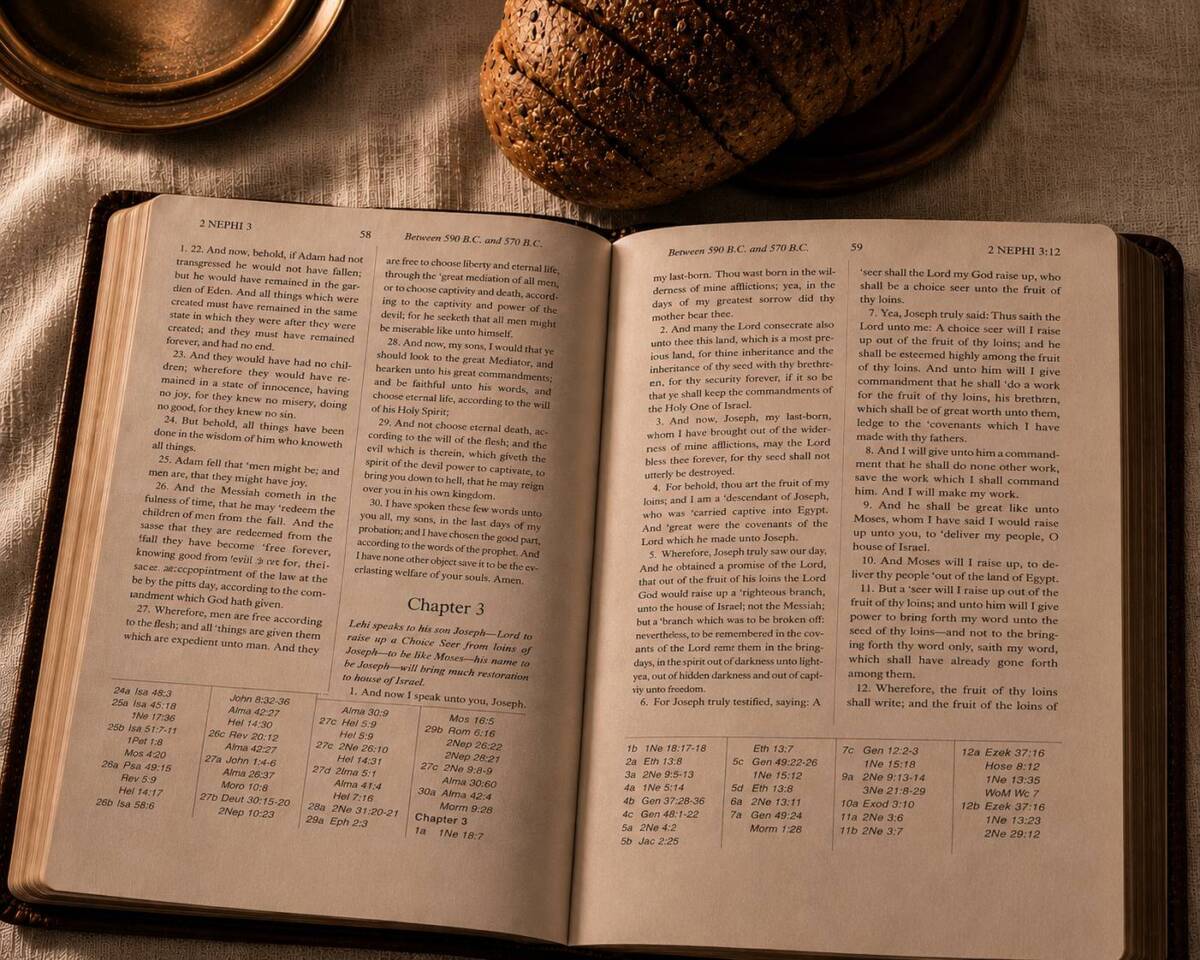
In an early prophecy within the Book of Mormon, a specific calling for the latter days through a Moses type of figure—a deliverer called the Choice Seer—is written of to come at a future date for a specific purpose. But what is a seer and who is the Choice Seer mentioned in 2 Nephi 3? Many, across the restoration churches, presume the answer to be Joseph Smith, but not so fast. The Choice Seer described in 2 Nephi 3 is a future figure — a descendant from the seed or house of Joseph through the lineage of Lehi — whose work will be to convince the descendants of Joseph and assist in building the kingdom of Zion -which has not yet been accomplished.
This is not an obscure doctrinal point. Properly understanding God’s prophetic plan for the descendants of the Book of Mormon, focuses The Church of Jesus Christ to labor diligently among the indigenous peoples of the Americas, to bring about the unfolding and fulfillment of the latter day promises before our eyes today. It reshapes how we understand the Restoration, the work that remains to be done, and the hope that lies ahead in building God’s kingdom upon the earth.
Understanding the Chapter
2 Nephi 3 can be confusing on a first read because the name Joseph appears in multiple roles. Understanding who is who is essential to reading the prophecy correctly.
Lehi is the speaker. He is on his deathbed, blessing his children one by one. In this chapter, he addresses his youngest son, Joseph.
Lehi’s son Joseph is the audience — the child receiving the blessing. His name appears at the beginning of the chapter (verses 1–3) and at the end (verses 22–25), framing the prophecy.
Joseph of Egypt — the biblical leader, son of Jacob/Israel, who saved his family during famine — is the source of the prophecy. Lehi quotes a prophecy from Joseph of Egypt that was recorded on the brass plates Lehi’s family carried from Jerusalem. This prophecy does not appear in the Book of Genesis as we have it today, but it was preserved on those ancient plates. The heart of the chapter (verses 5–21) consists of Joseph of Egypt’s words about a future figure.
The Choice Seer is the prophesied figure. He is the subject of Joseph of Egypt’s prophecy. Verse 15 tells us two things about his identity: his name will be Joseph (named after Joseph of Egypt), and his father’s name will also be Joseph. Verse 18 confirms he will have a spokesman like Aaron to Moses.
With these roles clarified, the chapter becomes much easier to follow. The question is: What does the prophecy say the Choice Seer will do, and who will match the description?
What the Choice Seer Will Do
The prophecy describes three specific works the Choice Seer will accomplish:
- Bring forth God’s word to the seed of Joseph. Verse 11 says the Choice Seer will be raised up “out of the fruit of thy loins” — from the descendants of Joseph of Egypt — and will bring forth God’s word to them. He will bring scripture to the descendants of Joseph, who are identified throughout the Book of Mormon as the Nephites, Lamanites, and their descendants.
- Convince the seed of Joseph of the truth of God’s word. Verses 11–12 make an important distinction. The Choice Seer’s role is not merely to produce scripture — it is to convince the descendants of Joseph of its truth. And here is the critical detail: the word of God will have “already gone forth among them” (verse 11). The scriptures — the Bible and the Book of Mormon — will already be available and shared. The Choice Seer’s work from the Lord is to convince the seed of Joseph that these two scriptures are true and that the covenants God made with their fathers are real.
This is a distinct work from translation. The Book of Mormon will already exist. The Choice Seer’s gift from the Holy Spirit is in convincing — in opening hearts, in demonstrating truth, in bringing a people to faith, belief and acceptance of God’s word.
- Be instrumental in the restoration of the House of Israel. Verse 8 describes the Choice Seer as “great like unto Moses” — not in the sense of producing new law, but in the sense of delivering a people. He will be instrumental in the gathering and assisting in restoring the House of Israel — the fulfillment of the covenant promises God made to Abraham, Isaac, and Jacob. This is the work of building the kingdom of Zion.
Christ Himself confirmed this expectation in 3 Nephi 21:9–11, describing a future servant who would do a “great and a marvelous work” among the remnant of Jacob, and warning that whoever would not believe in that servant’s words — which would be the words Christ had already given — would be cut off from the covenant people.
The Choice Seer will bring God’s word to the seed of Joseph, convince them of its truth (after the scriptures have already gone forth), and be instrumental in restoring the House of Israel and building the kingdom of Zion. These are specific, identifiable works.
Why Joseph Smith Jr. Does Not Fulfill This Prophecy
The name Joseph and the father’s name Joseph match. That is where the similarities end. David Whitmer examined this question carefully in his 1887 Address to All Believers in Christ and identified specific reasons why Joseph Smith cannot be the Choice Seer. His analysis, grounded in the text itself, remains compelling.
- Wrong lineage. Verse 11 states the Choice Seer will be raised up “out of the fruit of thy loins” — from the seed of Joseph of Egypt, through the line of Lehi. The Choice Seer will be a descendant of the Book of Mormon peoples — of Nephite or Lamanite ancestry. He will not be a Gentile.
Joseph Smith Jr. was a Gentile. The Book of Mormon says so. In the Title Page of the Book of Mormon, it prophesies that the Book of Mormon would come forth by “the gift and power of God” and to come forth by the “way of Gentile”. The Book of Mormon was correct. It did come forth by the gift and power of God through Joseph Smith, a Gentile. He was of European descent, not of the lineage of Joseph through Lehi. This single point disqualifies him from the prophecy regardless of any other consideration. The text is explicit: the Choice Seer comes from the fruit of Joseph’s loins. Joseph Smith does not.
- The convincing work is unfulfilled. The Choice Seer will convince the seed of Joseph — the descendants of the Book of Mormon peoples, including the indigenous peoples of the Americas — of the truth of God’s word. Nearly two hundred years after Joseph Smith, this work remains largely unaccomplished. Joseph Smith did not convince the Lamanites. As Whitmer wrote plainly: he never convinced a single Lamanite that Whitmer ever heard of.
- The Choice Seer requires a spokesman. Verses 17–18 describe the Choice Seer as someone whose “tongue shall not be loosed” — this describes a man that will not be a gifted speaker. The Lord will raise up a spokesman for him, just as Aaron served as spokesman for Moses. Joseph Smith, by contrast, was a capable and effective speaker. This detail in the prophecy does not match Joseph Smith.
- Those who seek to destroy the Choice Seer will be confounded. Verse 14 says that those who seek to destroy the Choice Seer “shall be confounded.” Those who sought to destroy Joseph Smith were not confounded — they succeeded. Joseph was killed at Carthage, Illinois in 1844. The text says the Choice Seer’s enemies will be confounded. Joseph’s enemies prevailed.
These points, from one of the original eyewitnesses to the golden plates are not minor quibbles. They are drawn directly from the text of the prophecy itself. The Choice Seer must be of the seed of Joseph. He must convince the Lamanites of the word. He must require a spokesman. His enemies must be confounded. Joseph Smith Jr. does not meet these criteria.
None of this diminishes Joseph Smith’s actual work. God used Joseph as an instrument to bring forth the Book of Mormon and he (and Oliver Cowdery) received priesthood authority to establish His church once again. The Book of Mormon is true scripture. Joseph’s courage and sacrifice are honored.
In fact, recognizing this distinction actually elevates the significance of the Book of Mormon. The Book of Mormon is not merely a supporting document for a single prophet’s authority — it is the word of God that has gone forth and that the future Choice Seer will use to convince the seed of Joseph. It is the scripture through which a people will be gathered and the kingdom of Zion will be built. It exists for a purpose far beyond validating any single man’s claims.
The Role of the Church Today
If the Choice Seer has not yet come, what is The Church of Jesus Christ doing in the meantime?
The answer is found in the prophecy itself. Verse 11 says the Choice Seer will convince the seed of Joseph of the truth of God’s word, “which shall have already gone forth among them.” The scriptures must go forth before the Choice Seer arrives. The word of God — the Bible and the Book of Mormon — must already be among the descendants of Joseph when the Choice Seer comes to do his convincing work.
The Church of Jesus Christ takes this seriously. Bringing the word of God to the seed of Joseph — to the indigenous peoples of the Americas, to the descendants of the Book of Mormon peoples — is an active, present-tense mission. It is not the church’s role to do the convincing work, the prophecy assigns that to the Choice Seer. That is his work. But it is the church’s role to ensure that the word of God has gone forth among them, so that when the Choice Seer comes, the ground is prepared.
This is not passive waiting. It is faithful, active labor — the work of planting seeds that a future harvest will bring to fullness. The Church of Jesus Christ looks forward to the fulfillment of this prophecy and works today to prepare for it.
Why This Matters
Understanding the Choice Seer prophecy correctly has profound implications for how we see the Restoration of the Gospel and the future. If Joseph Smith is the Choice Seer, then the ‘work’ is essentially complete — the prophesied work has been accomplished, and the church’s role is simply to maintain what Joseph established. If the Choice Seer is a future figure, then the gathering of Israel remains and the work is not complete. The greatest work is still ahead — the convincing of the seed of Joseph, the gathering of scattered Israel, the building of Zion. The Book of Mormon was given not as the final chapter of a completed story, but as a foundational tool for a work that has not yet reached its climax. We are in the middle of the story, not at the end.
This shifts the entire posture of faith from looking backward to looking forward. It means the most extraordinary prophecies of the Book of Mormon — the gathering, the sealed records, the fullness of the covenant, Zion — are still to come. It means God has more to do, and that the church’s role is to be faithful, to prepare, and to be ready.
The Book of Mormon itself points forward. It describes past as well as future events that have not yet happened. It promises the coming forth of sealed records (Ether 4:4–7). It prophesies the building of a New Jerusalem – Zion (3 Nephi 21:23–24). It describes the convincing of a people. These are not historical memories — they are future expectations. And the Choice Seer is at the center of them.
When the Choice Seer comes, the description given in 2 Nephi 3 will help identify him — his lineage, his name, his spokesman, his commissioned work from the Lord among the seed of Joseph. Until then, the Divine Commission of The Church of Jesus Christ in bringing God’s word to the descendants of Joseph continues. And the anticipation of what God is yet to do, should fill every believer with hope.
“And there shall rise up one mighty among them, who shall do much good, both in word and in deed, being an instrument in the hands of God, with exceeding faith, to work mighty wonders.” — 2 Nephi 3:24
More Resources
Can’t see the document? Click here to download or view the PDF.